
Attention High School Students: Hot New Collab Just Dropped
Connecting with the community outside of the hallowed halls of academia is an important part of our work. What’s the point in doing cool and useful science if no one knows about it? That’s at least half the reason why this website exists, after all (the other half is that all the other labs in the department have one #PeerPressure).
One group that we’ve been connecting with a lot recently is high school students. We’ve hosted students through the X-labs program (see our Insta and also Aanya’s post on this blog), and Steve has given talks to the SHAD summer student group on campus for the past few years
We’ve stepped things up a bit by collaborating with Futurum Careers who, in their words, are “free online resource and magazine aimed at encouraging 14-to-19-year-olds worldwide to pursue careers in science, technology, engineering, maths and medicine (STEM), and social sciences, humani6es and the arts for people and the economy (SHAPE).” In the resulting article, you learn some important immunology and about some of the research we’re doing in the lab to understand it better.
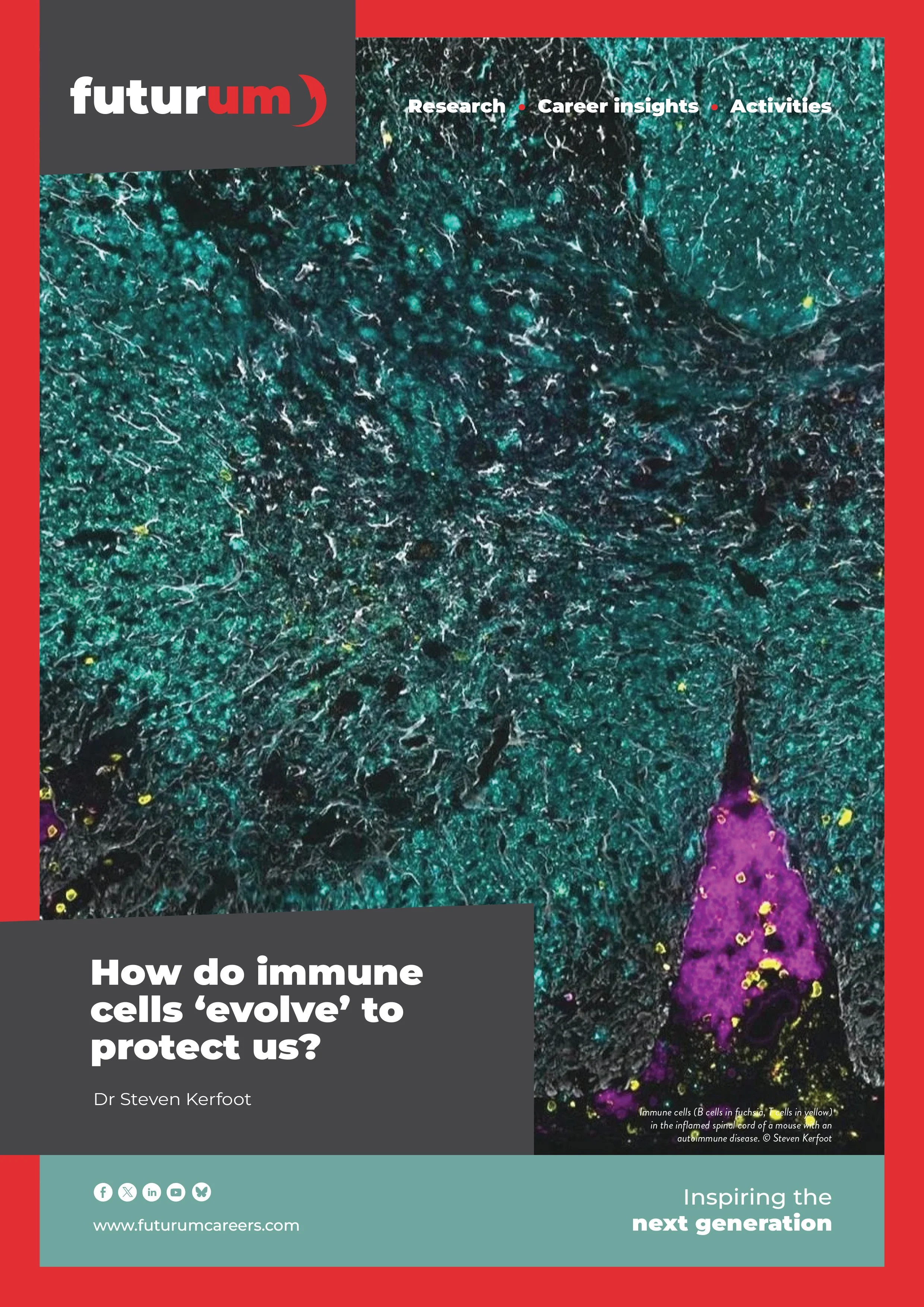
Very pretty front page showing immune cells doing something that they shouldn’t be doing
In the article, we talk about how mutant immune cells battle to the death in order to become powerful enough to protect you from dangerous pathogen invaders. But sometimes, things go wrong and your immune cells start attacking you instead, causing autoimmune disease.
Also, you hear from PhD Candidate Yi-Han Chen and lab-alum Eden Kemal. They tell you about how they got interested in science and their own paths to becoming scientists.
For those of you in education, there is a downloadable work sheet that you may find of use to help navigate and engage with the material. You can download the article and work sheet (for free!) directly from the Futurum website, or from our lab website using the buttons on the the “Our Research” page.
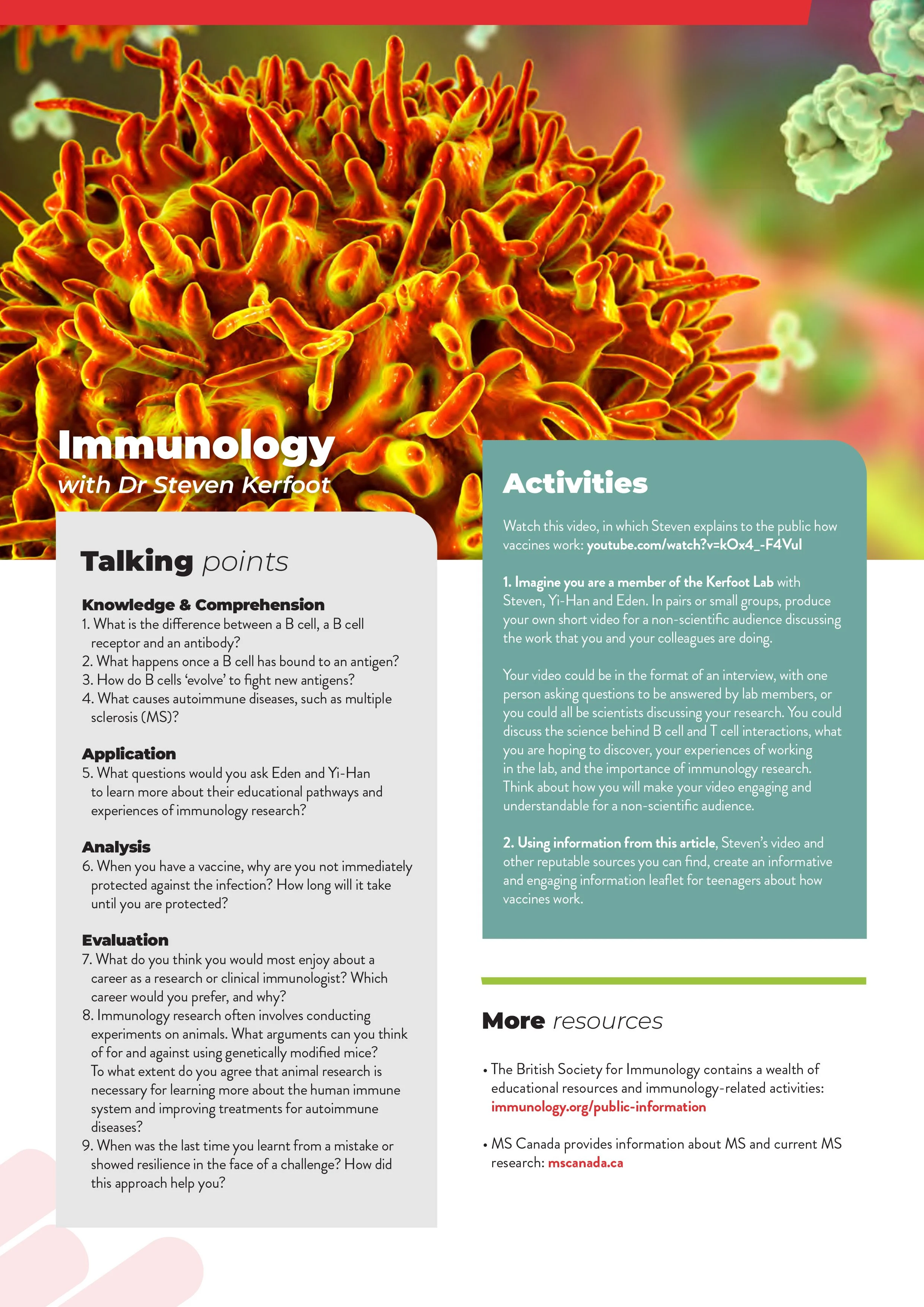
Homework!
What did you learn about immunology and being an immunologist?
If you find the article interesting or useful in any way, let us know in the comments! We’re always looking for new ways to engage with the community outside of the lab.
